
Garage Door Opener Reverses Before Closing Las Vegas: Causes and Fixes
A reverse is the opener doing its safety job. The fix depends on where the door reverses. Read the safe steps below, then call us. Emergency service is available 24/7.
- What each kind of reverse usually means
- Safe steps to take right now
- The failed part named in plain words
- The total given before work starts
- Emergency service available 24/7
Tell Us What Your Opener Is Doing
Pick what fits, or describe it in your own words.
Why Your Opener Reverses: It Thinks Something Is in the Way
Every opener must reverse a closing door that touches an object. The CPSC requires it, and the door must reverse within two seconds. So a reverse with an object in the way is a good sign.
A reverse with nothing in the way means the opener is misreading the door. It may feel the floor, a binding track, or a blocked sensor as an obstruction. Where the door reverses tells you the likely cause.
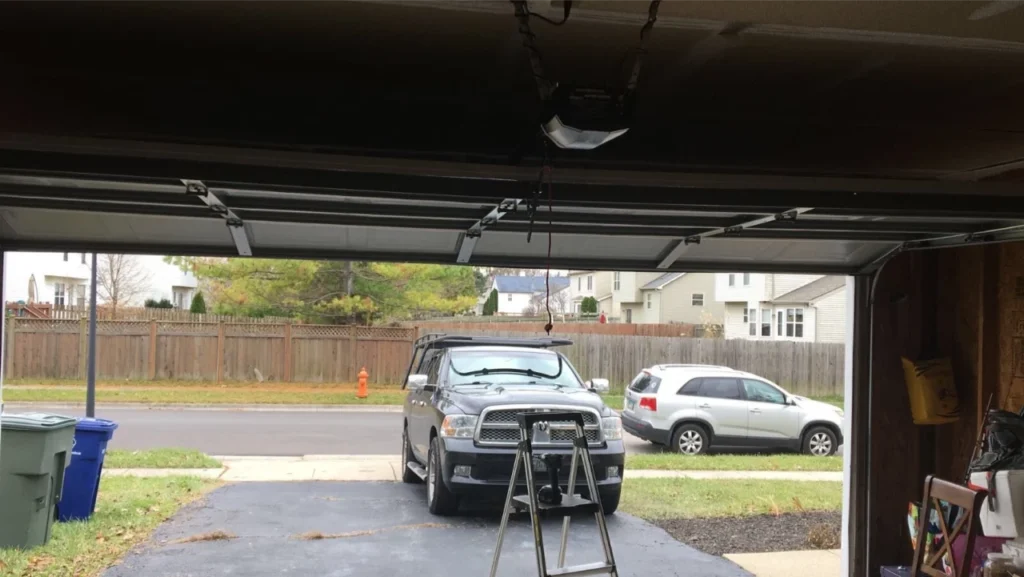
Where does it reverse?
- At the floor: the down travel may be set too far
- A few inches above the floor: the force may be too sensitive, or something is under the door
- Partway down: a blocked sensor or something in the doorway
- With scraping or grinding: a binding track or rollers
Six Causes of an Opener That Reverses
Start with where the door reverses.
Down travel set too far
The door presses into the floor, and the opener treats it as an obstruction. Chamberlain says this is the most common reason a door reverses after it touches the floor.
Force too sensitive
If the close force is too low, normal resistance near the floor can trip the reverse.
Blocked or misaligned photo eyes
Dust, a stored item, or a bumped sensor can interrupt the beam. Both sensor lights should glow steady.
Something under the door
Debris, a stone, or a bent bottom seal can catch under the door as it closes.
Door out of balance
A weak or broken spring makes the door heavy, and the extra resistance can trip the reverse. This is the most serious cause.
Binding track or worn rollers
Bent tracks or worn rollers drag on the door and add resistance.
What You Can Safely Check
No tools needed. Stay clear of the door while you test, and stop at the first sign of a spring problem.
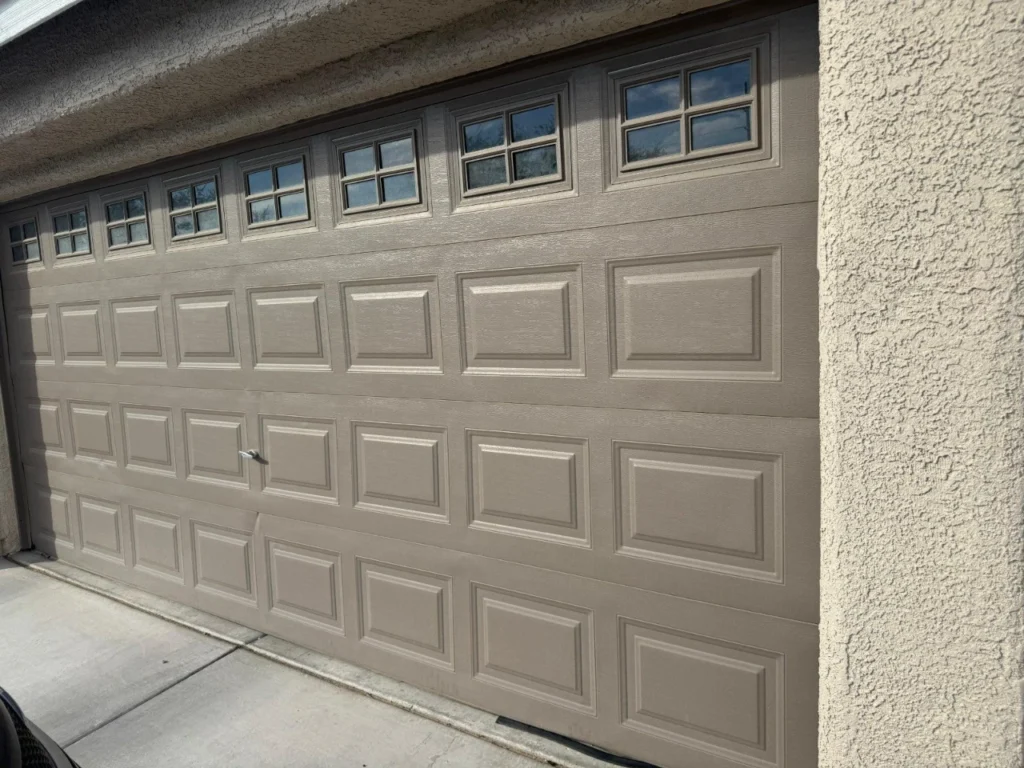
Safe steps
- Clear the floor under the door. Remove stones, debris, and anything in the beam path.
- Check both sensor lights. Both should glow steady. Wipe the lenses.
- Watch where it reverses. Note whether it is at the floor, just above it, or partway down.
- Look at the bottom seal. See whether it folds or catches as the door closes.
- Run the 2 by 4 test. Lay a 2 by 4 flat under the door and press close. The door should touch it and reverse.
Do not
Do not tape over a sensor or turn the force up to stop the reverse. That can disable the safety reverse. Do not touch springs, cables, or the bottom brackets. DASMA says they are under extreme tension. If the door feels heavy, stop and call us.
Signs and Likely Causes
Match what you notice to the likely cause.
| Sign | Likely cause | Safe step | Call us when |
|---|---|---|---|
| Reverses as it touches the floor | Down travel set too far | Watch where it reverses | Always. Do not adjust without testing |
| Reverses a few inches above the floor | Force too sensitive, debris, or a bent seal | Clear the floor and check the seal | It keeps happening |
| Reverses partway down | A blocked or misaligned sensor | Clean the lenses and check the lights | The lights will not go steady |
| Reverses and the lights flash five times | The opener sensed an obstruction | Clear the doorway | It keeps happening |
| Reverses with grinding or scraping | A binding track or worn rollers | Do not force the door | Always |
| Reverses and the door feels heavy | A weak or broken spring | Stay clear of the door | Always, and it is urgent |
Why Openers Reverse in Las Vegas
Dust and debris
Dust builds up fast in the Valley. It can block sensor lenses and gather under the door. Wipe the lenses each month.
Storms and surges
Monsoon storms run from late June into September. A surge can damage the circuit board or sensor wiring.
Heat and age
Las Vegas hit 120 degrees on July 7, 2024, according to the National Weather Service. Parts wear over time. Many openers last 10 to 15 years, according to House Digest.
What We Do When Your Opener Reverses
We find the cause, explain it, and give you the total before we start. Read what changes the repair cost, or see our guides to an opener that is not closing, not working, or clicking.
Our steps
- You call or send the form. Tell us the brand and where the door reverses.
- We test the sensors, settings, and door. We check the photo eyes, the limits, the force, the tracks, and the balance.
- You get a plain explanation and a total. You see repair and replacement options before any work starts.
- We fix it and test the safety reverse. Every job ends with a reverse test and a remote check.
Where We Repair Openers in the Las Vegas Valley
We cover the Valley. That runs from the Strip corridor near UNLV to Summerlin near Red Rock Canyon, and from Henderson to Centennial Hills.
Las Vegas and Paradise
Our home base is 89120, near Sunset Regional Park. We also cover the Strip area, UNLV and the Thomas & Mack Center, and the airport area.
Henderson
Green Valley and nearby neighborhoods.
North Las Vegas
Including the Aliante area.
Summerlin
The west side, near Red Rock Canyon.
Spring Valley
Along Tropicana Avenue and the 215.
Enterprise
The south Valley.
Centennial Hills
The northwest Valley.
Reversing Opener Questions in Las Vegas
Why does my garage door opener reverse before closing?
The opener thinks something is in the way. Common causes are blocked or misaligned photo eyes, a down limit set too far, a force setting that is too sensitive, and a door that binds in the tracks.
Why does my door hit the floor and go back up?
Chamberlain says the most common reason is that the down travel needs adjusting, so the opener feels the floor as an obstruction. Other causes are a door problem or, rarely, the logic board.
Why do my opener lights flash five times when the door reverses?
On Chamberlain Security+ 2.0 openers, five flashes and a beep mean the door touched an obstruction while closing, according to Chamberlain. Other brands use different codes, so check your manual.
Is a reversing door a safety feature?
Yes. A closing door must reverse within two seconds of touching an object, according to the CPSC. A reverse that works is good. A reverse with nothing in the way needs a fix.
Can I turn up the force to stop it from reversing?
Not without testing. Raising the force or moving a limit can disable the safety reverse. Test with a 2 by 4 after any change, or call us.
How do I test the safety reverse?
Lay a 2 by 4 flat under the door and press close. The door should touch it and reverse. Test it each month. If it fails, stop using the opener and call us.
Can a broken spring make my door reverse?
Yes. A door that is out of balance adds resistance, so the opener can reverse. Signs are a heavy door, a loud bang, or a gap in the spring. Stay clear and call us.
Is a reversing door an emergency?
It is if the door is stuck open and you cannot secure the garage, or your car is trapped inside. Emergency service is available 24/7 and costs a little more than a regular visit. See our emergency repair page.
How much does it cost to fix a reversing opener?
It depends on the cause. Clearing and aligning sensors usually costs less than a new sensor, wire, or board. You get the total before work starts. Our repair cost guide explains what changes the price.
Do you repair all opener brands?
We repair LiftMaster, Chamberlain, Genie, and Craftsman openers, and other supported brands.
Call King Garage Opener When Your Opener Reverses
Tell us the brand and where the door reverses. We test the sensors, settings, and door, explain the cause, and give you the total before we start. Emergency service is available 24/7.
King Garage Opener
- 3058 E Sunset Rd, Las Vegas, NV 89120
- Phone: (702) 829-2196
- Hours: Monday to Friday, 8 AM to 6 PM. Emergency service: 24/7